
Is It Time for a Dedicated Tennessee State Fire Marshal’s Office?

Updated: Aug 29
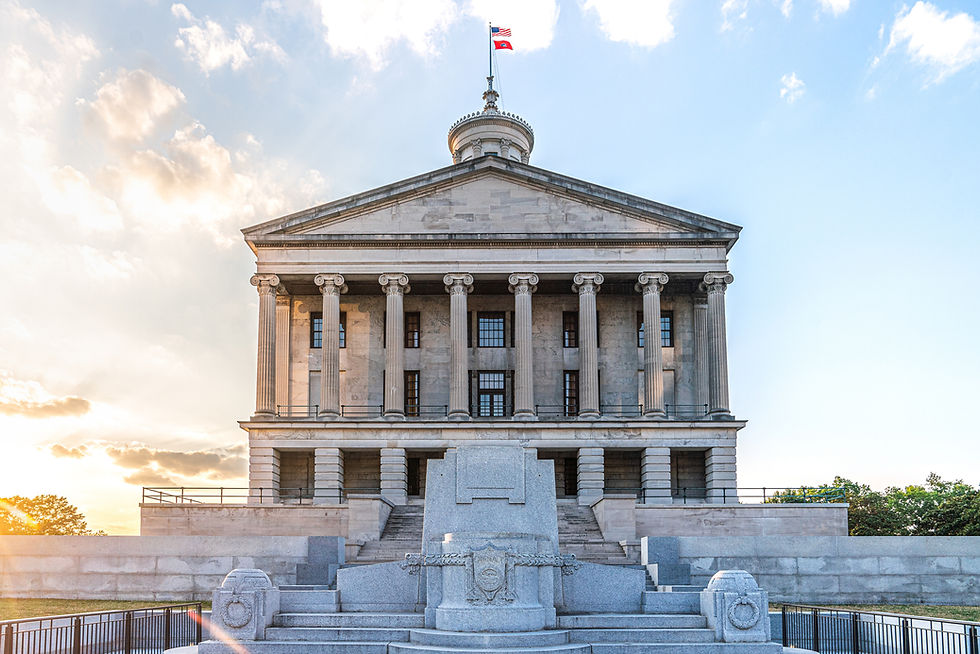
Continuing a conversation about the future of fire prevention in Tennessee. Over the past few months, I've written about topics that I believe are critical to the future of fire prevention in Tennessee. I've shared why I believe Tennessee should adopt a unified Tennessee Fire Code, and I've discussed the need for a professional career development pathway that allows fire prevention personnel to grow from fire inspector to plans examiner and ultimately to fire marshal.
While those articles focused on codes and professional development, they all point to a much bigger question: Is Tennessee's fire prevention system organized to meet the challenges of the future? This isn't an article about criticizing individuals or questioning the dedication of those currently serving our state. Tennessee has many hardworking public servants committed to protecting our communities. Instead, this is a conversation about organizational structure and whether our current model is the best one to support the future of fire prevention. Fire prevention has never been more complex. Today's professionals are expected to understand everything from lithium-ion battery energy storage systems and mass timber construction to data centers, performance-based design, hazardous materials, and constantly evolving model codes and standards. The profession has changed dramatically over the last two decades and I believe our leadership structure should evolve with it. One aspect of Tennessee's current system that deserves discussion is how fire prevention is organized at the state level. Today, the Commissioner of the Tennessee Department of Commerce and Insurance also serves as the State Fire Marshal. In that role, the Commissioner oversees an agency whose responsibilities extend far beyond fire prevention, including insurance regulation, TennCare, professional licensing boards, emergency communications (911), law enforcement training and certification, and numerous other statewide regulatory and public safety programs. Fire prevention is one important part of that mission but it is only one part.
This isn't a criticism of the Commissioner or anyone who has served in that role. In fact, it highlights the opposite. The Department of Commerce and Insurance has an incredibly broad mission, and no single executive can reasonably devote the level of time and specialized attention that modern fire prevention deserves while simultaneously leading one of the state's largest regulatory agencies.
That leads me to a simple question: If we were designing Tennessee's fire prevention system from the ground up today, knowing everything we know about modern fire prevention, would we build the same organizational structure we have now? I believe it's a question worth asking. I also believe Tennessee should begin a thoughtful discussion about establishing a dedicated Tennessee State Fire Marshal’s Office, led by a career fire prevention professional and focused exclusively on advancing fire prevention, code administration, community risk reduction, statewide training, technical guidance, and code development.
More importantly, I believe that state office should be led by a career State Fire Marshal whose professional background is rooted in fire prevention. The individual serving in that role should possess significant experience in fire code administration, plan review, fire inspections, fire protection systems, investigations, leadership, and community risk reduction. These are the disciplines that define modern fire prevention, and they deserve leadership with firsthand knowledge and experience. The organization itself should reflect the profession it serves. A traditional structure consisting of a State Fire Marshal, an Assistant State Fire Marshal, and Deputy State Fire Marshals would provide a clear chain of leadership, accountability, continuity, and technical expertise focused solely on one mission: protecting lives and property through prevention. Tennessee wouldn't be charting unknown territory by exploring this idea. States across the country have organized their fire prevention systems in different ways. California operates a dedicated Office of the State Fire Marshal focused on fire prevention, code development, engineering, investigations, and statewide training. North Carolina provides another useful example, although its model is not a completely standalone agency. Legislation enacted in 2023 separated the roles of Insurance Commissioner and State Fire Marshal beginning January 1, 2024. The Office of the State Fire Marshal remains housed within the Department of Insurance but is authorized to exercise its powers and duties independently.
Under this structure, the Insurance Commissioner appoints a State Fire Marshal to a three-year term, subject to confirmation by the North Carolina General Assembly. This ensures that the State Fire Marshal is a separate official who can concentrate on the responsibilities of the office rather than requiring the Insurance Commissioner to serve in both roles. North Carolina’s approach is different from the fully independent structure I am proposing for Tennessee. However, it demonstrates that states can separate fire prevention leadership from the broader responsibilities of an insurance commissioner and establish a dedicated State Fire Marshal position with a defined term and responsibilities.
Tennessee does not need to replicate North Carolina’s model or that of any other state. Every state has unique needs, priorities, and organizational structures. These examples simply demonstrate that state fire prevention organizations can evolve with the profession. They also show that it is reasonable to ask whether Tennessee’s current structure remains the best fit for the future. A stronger statewide fire prevention organization would benefit far more than state government. It would support local fire departments, fire marshals, fire inspectors, fire plans examiners, contractors, architects, engineers, and, ultimately, every Tennessean. Strong state leadership can provide consistent training, technical guidance, code interpretations, code development, and resources that many local jurisdictions may not have the capacity to develop independently. Creating a Tennessee Fire Code, improving statewide training, developing the next generation of fire marshals, supporting local jurisdictions, and preparing for emerging technologies are all long-term initiatives. They require consistent leadership, technical expertise, and a clear vision that extends beyond any single administration. This proposal isn't about changing people. It's about strengthening the profession. Every organization eventually reaches a point where it must ask whether its structure still supports its mission. As Tennessee continues to grow, I believe we've reached that point with fire prevention.
My hope is that this article starts a constructive conversation about what Tennessee's fire prevention system should look like over the next five to ten years. Over the past few months, I've written about creating a Tennessee Fire Code, strengthening career development for fire prevention professionals, and improving collaboration across our state. Those ideas all point toward one larger vision: professionalizing and modernizing fire prevention in Tennessee. I believe establishing a dedicated Tennessee State Fire Marshal’s Office led by a career fire prevention professional with extensive experience in the field would be an important step toward achieving that vision. I don't expect everyone to agree with my proposal, and that's okay. My goal isn't to have all the answers. My goal is to start a conversation about how we can build the strongest fire prevention system possible for the people of Tennessee.
The question isn't whether Tennessee's fire prevention system has served us well. The question is whether we're willing to build the system that will serve Tennessee for the next generation.
What do you think? If we were building Tennessee’s fire prevention system from the ground up today, what would it look like?
If you believe this is a conversation worth having, please like and share this article to help it reach others across Tennessee’s fire service and fire prevention community.
In my next article, I’ll be sharing an exciting announcement that represents a meaningful step in the right direction one that begins turning these ideas into action. I’m looking forward to sharing it with everyone soon. Building the Future of Fire Prevention in Tennessee An ongoing series exploring leadership, code development, professional growth, and the future of fire prevention in our state.

Comments